How the set took shape.
From the designer’s conversation and reference deck to a model you can question from every side.
Listen and record
The conversation established the tree, stage, front-left wagon and right-hand green room. The brief records what is wanted, what is excluded and what needs an answer.
Read the 102 images
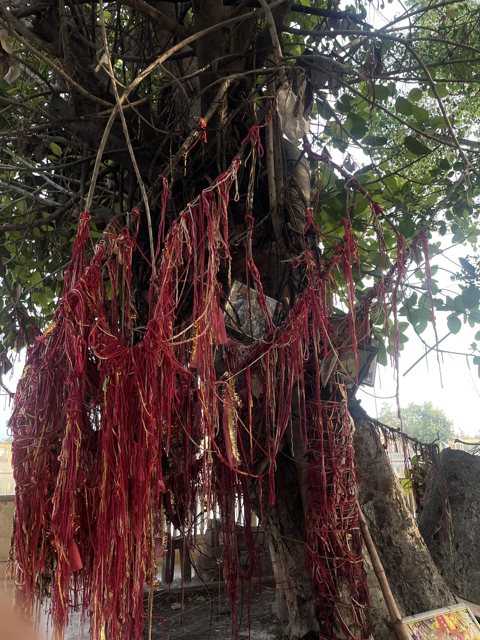
Haiku described each photograph. Scripted colour measurements and Sonnet lens reports helped separate period, material, light and spatial evidence. Each reference has an id.
Test the atmosphere
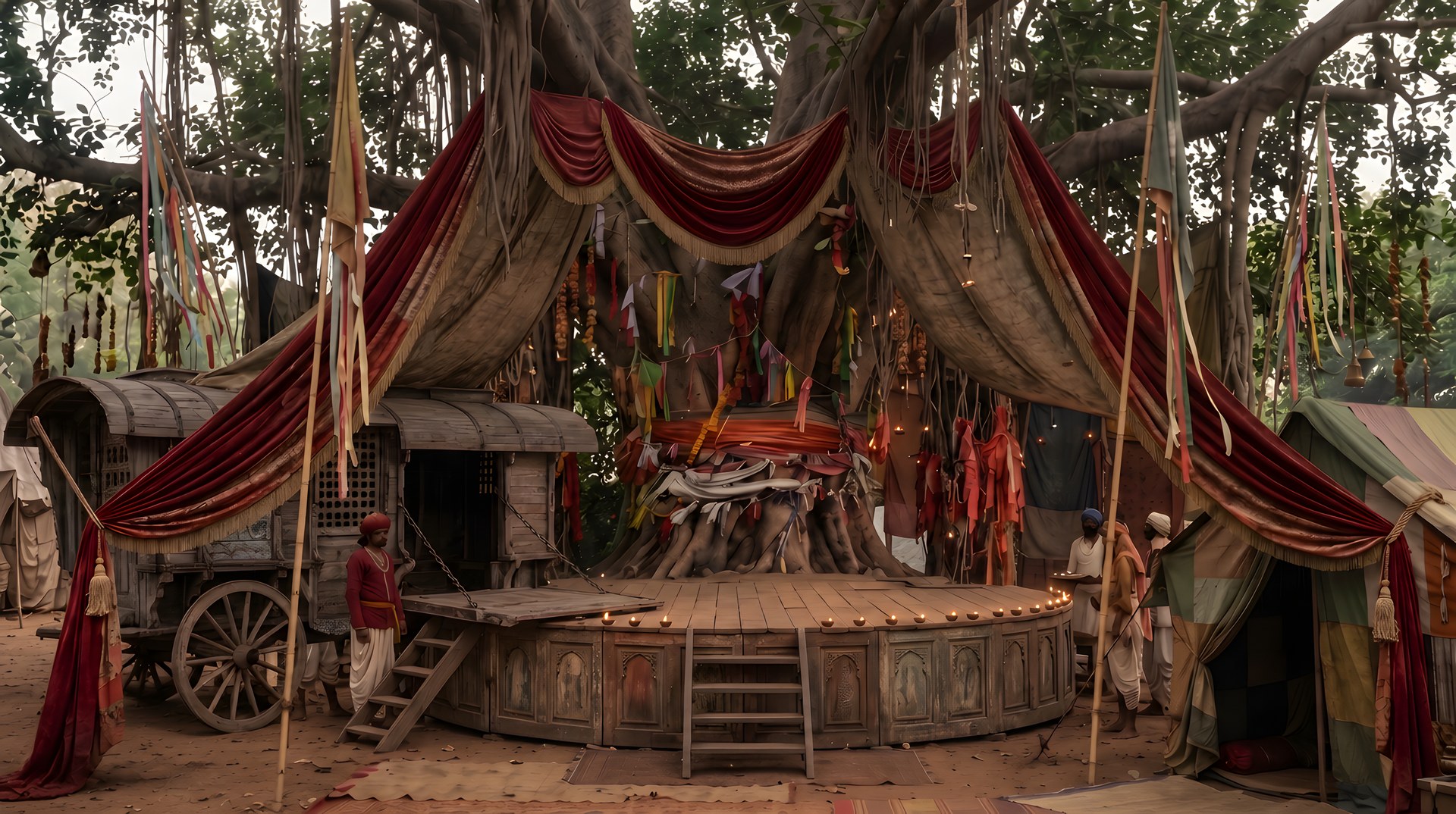
Higgsfield concepts explored shrine, troupe, flame and encampment directions. The v3-c image became the visual target; its duplicated wheel was corrected.
Build the set in Blender
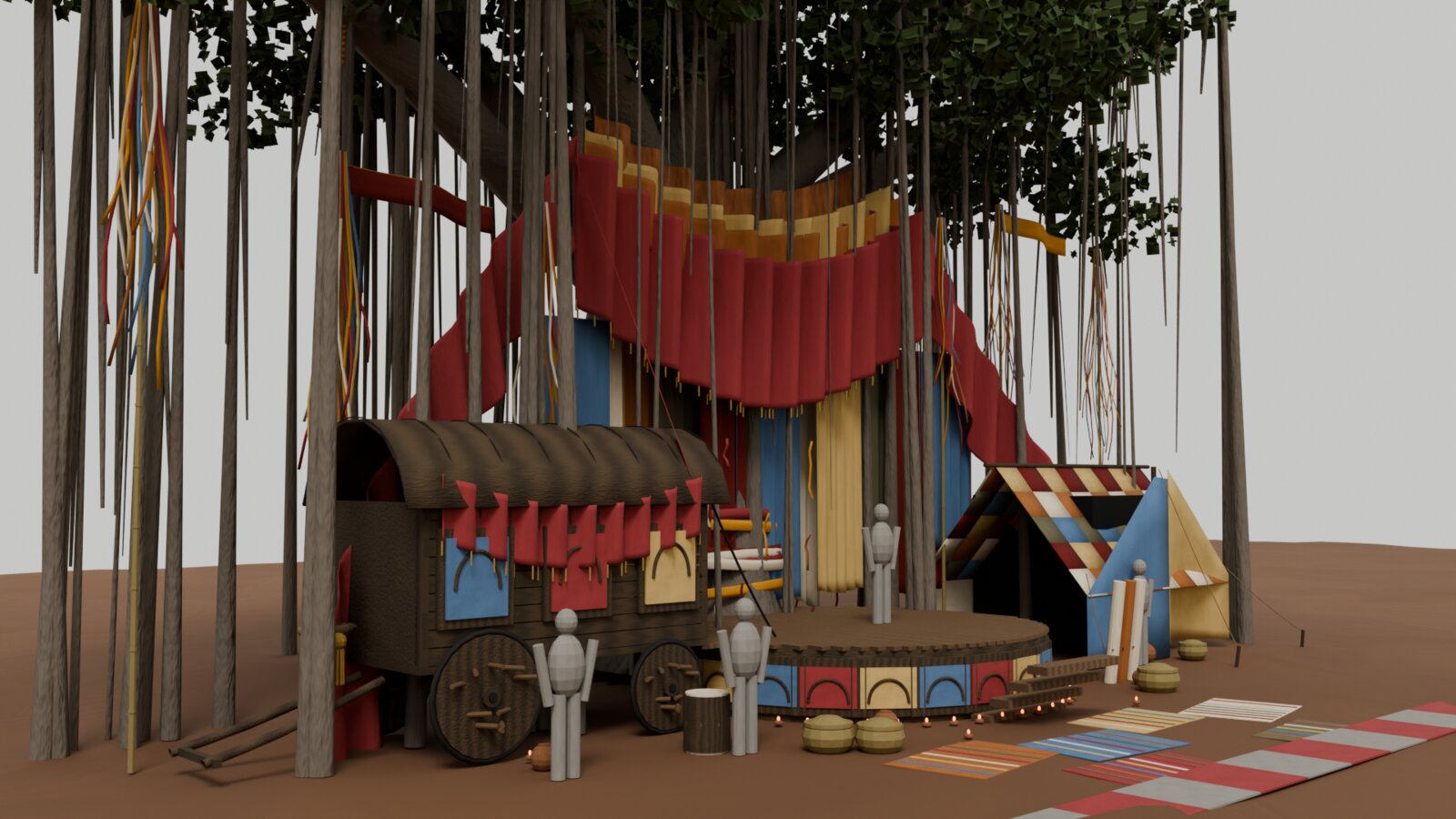
Blender 5.1.2 turned the brief into named objects and camera views. Existing licensed assets supplied materials. Later builds changed the earth, stage, drapes and tree.
Connect the evidence
The item register and reference links join each object to source photos, notes and concepts. Weak links stay labelled. Approximate model bounds need fabrication review.
Bring it into the browser
The three.js viewer adds camera views, lighting, measurements and subtle movement. Codex implements; Kimi K3 reviews; Kev directs the design and integration.
Review the experiments
Lighting rigs and character cards are studies. Early ComfyUI clips produced merging faces and a modern truck and were rejected. New Dublin renders need a visual review before inclusion.
Make it repeatable
The Method explains the decisions behind these steps. The handover carries the brief, editable sheet template and AI kit so the team can continue from the source files.